1. About this blog How do you manage dozens of specialized attack prompts and export compliance-ready security findings? When building an automated red teaming framework, two challenges emerge quickly: managing complex, role-specific prompts for different agents and attack scenarios, and exporting test results in a format suitable for audit trails and compliance documentation.
In this blog, I’ll share the practical patterns I used in Sentinex to solve these challenges using embedded resources for prompt management and structured JSON export for findings documentation.
1. About this blog Want to orchestrate multi-agent conversations in Semantic Kernel with your own deterministic logic? Microsoft’s Semantic Kernel provides GroupChatManager as an extensible base class for multi-agent orchestration. For specialized scenarios like red teaming, compliance testing, or structured workflows, you can extend it with simple conditional logic that follows your exact conversation flow requirements.
In this blog, I’ll show you the approach I used in Sentinex—a red teaming framework that extends GroupChatManager with straightforward if/else logic to orchestrate adversarial conversations between researcher, model, and assessor agents.
1. About this blog Want to see how multi-agent systems can automate LLM security testing? I built Sentinex—an automated red teaming framework using .NET 8 and Microsoft Semantic Kernel. It orchestrates three AI agents (Researcher, Model Under Test, and Assessor) to systematically probe LLMs for security vulnerabilities. The framework discovered critical issues in the gpt-oss-20b model through automated adversarial conversations.
In this blog, I’ll walk through how Sentinex works and what I learned building it.
📖 The Problem: Field Reports Are Not Agent-FriendlyArchaeological field reports, historical journals, and excavation notes are invaluable—but they’re locked in PDFs and text documents. When our multi-agent AI team (from Blog 4) analyzes satellite imagery or LiDAR data, they need historical context:
“Has this site been previously surveyed?” “What artifacts were found in similar geological formations?” “What do historical texts say about settlements in this region?” Traditional keyword search fails here.
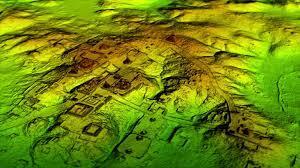
1. About this blog How do you transform raw LiDAR point clouds into archaeological discovery tools using Python and Azure Container Apps? LiDAR (Light Detection and Ranging) datasets contain millions of 3D points representing terrain surfaces. For archaeologists, these point clouds can reveal hidden structures, ancient settlements, and landscape modifications invisible to the naked eye. But processing raw LAS/LAZ files into actionable terrain models requires specialized geospatial tools and significant computational resources.
1. About this blog Are you tired of getting false alerts from your security cameras every time a cat walks by or a tree branch moves in the wind? If you find yourself in this situation, you’re not alone! 🚀. According to industry research, over 90% of security camera alerts are false positives - that’s right, 90%! This leads to alert fatigue where homeowners simply disable notifications, completely defeating the purpose of having a security system.